If you’ve carried out some genealogical research on your own family, and are thinking about becoming a professional genealogist, then welcome to an extremely fascinating career, full of variety and surprises! But before you plunge in, have a look at my list of ten things you will need, based on my own experience after nearly twenty years in the business.
1. Experience. Of course this should go without saying. You can’t start any business without experience in the service you are offering. No doubt you will have started by carrying out research on your own family, and you should carry on doing this, but before you start charging for your service, you should carry out some research for other people for fee to get as much variety as possible. Everyone’s ancestry is different, so it’s a very good idea to get as much experience as you can. You could start by offering to research your friends’ family trees (if they’re happy to just pay the expenses). I would recommend that you have had experience of ancestry going back to at least the 16th century before you start charging, as research at these dates is usually very different to 20th or 19th century research.
2. Accreditation. While it’s not essential, it is certainly highly recommended that you have some sort of accreditation in genealogy and/or research. You will certainly need some credentials to compete with other genealogists in your area. When I started there were very few courses specifically in genealogy, and I did a module on historical research as part of my Open University degree, but you can now do excellent genealogy courses at institutions such as the Institute of Heraldic and Genealogical Studies. Many of these courses can be undertaken online.
3. A website. The best way for clients to find you is via a website that contains some interesting content, details about your services and a blog page. Websites are quite easy to set up these days, particularly using WordPress, and you don’t need to be a computer expert to add content and update your pages. However, it can take a while to generate traffic to your site when you are just starting, so you might want to invest in some advertising as well. Facebook advertising can work quite well, and you can link it back to your site to get more traffic – but make sure you set yourself a budget and stick to it, otherwise you can end up spending more than you intended! It would also be a very good idea to learn about keywords, and generating traffic.
4. Knowledge of History. Genealogy is a historical subject, and the people you are researching lived in history. Unless you have at least a basic knowledge of the history of your area and country, your service is going to be patchy and without depth of knowledge. For example, if you don’t understand about the huge migratory patterns from rural areas to the industrial towns and cities in mid-19th century England, how are you going to be able to carry out research effectively, and give your clients any understanding of the movements of their ancestors? This background knowledge feeds your research and enriches the reports you send your clients. Keep learning all you can about history: read books, go on courses and visit museums. You will improve your research skills and your clients will really appreciate the extra knowledge that you can provide.
5. Knowledge of Geography. For similar reasons to a knowledge of history, it is highly recommended that you have some knowledge of the geography of the country in which you carry out research, and specifically of the local area you work in. This knowledge will grow with each project, but it is as well to have a basic understanding of where all the major towns and cities are in your country when you are starting out.
6. Subscriptions and Memberships. To carry out research, you will need subscriptions to at least a couple of research websites such as Ancestry and FindMyPast, so make sure you budget for these. However, I would also recommend that you join one or two societies, and have at least one professional membership. You might want to join your local Family History Society, and/or the Society of Genealogists. I would also recommend that you become a member or Associate of the Association of Genealogists and Researchers in Archives (AGRA), which has a code of practice, and a members page through which you can get clients.
7. A collection of reference books. Genealogy can be a complex subject, and you can’t carry every bit of information in your head; for example, the dates that certain resources begin. Make sure you have some good genealogy reference books to hand that you can call on to make sure you are using all the right resources for the period you are researching. I would recommend a copy of Ancestral Trails, and The Family Historian’s Enquire Within (these are the ones I use, but I’m sure there are many more!)


8. A knowledge of palaeography. At some point in your career, you will need to be able to read some old documents, particularly wills or old land documents. Before you start, it would be an extremely good idea to develop skills in reading old documents. The National Archives has an online tutorial in this subject (they also have a Latin tutorial, which is also very useful), but you can also take courses in this subject (the IHGS has a very good one).
9. A specialisation. While it’s not essential when you start up, it is a very good idea to develop an area of specialisation, which can attract more clients who are looking for an expert in a particular subject. Examples of areas you could specialise in are military records, probate records, heraldry, living people research, your local area, or a time period such as medieval history. Choose something you have a real interest in, and get some in-depth knowledge about it.
10. Contacts. If your research covers the whole country, you will need a professional contact list. Again, this is something you can build up over time, but it would be a good idea to make contact with a few other genealogists across the country and develop a pool of researchers in different areas that you can call on when you need research doing in a local archive out of your own area – and of course you can also offer your own local services to them. This is something that will be very useful for research before the 19th century, and for where there are gaps in the online parish registers. However, before calling on another researcher and paying them, do check if there are any local sources that can be viewed or ordered online. When using another researcher, you’ll be incorporating their invoice into your own – but you should always make your client aware that you will be contacting another researcher beforehand – especially if their hourly rate is higher than yours.
 Christmas is coming, and once again it’s time to rack our brains, trying to think of the best gifts for our nearest and dearest. Rather than the same old novelty socks or yet another hat and scarf set, why not think about what your friends and relatives might like as part of their interests or hobby? And whether you’ve got an experienced or a beginner genealogist on your gift list, there are plenty of ideas for genealogy gifts that will be very gratefully received.


 Those of you who know me know that as well as being a professional genealogist, I am also a novelist specialising mostly in historical fiction, and some of my novels contain a family history theme.
 In my novel,
  (There’s a FREE gift towards the end of this post, so please read on!)
 I started my interest in family history when I was in my 20s. This was in the 1980s, when the hobby of genealogy was generally reserved for the middle-aged, and those who could afford to travel to local archives, including St. Catherine’s House (now Television House) in London where the Civil Registration indexes were held. Luckily for me, I worked for a while at Drury Lane Theatre, just around the corner from St. Catherine’s House, where I used to spend my lunch hour trying to find my grandmother’s marriage and birth! I can’t remember ever wondering why I felt my family history was important, I just found the search fascinating.
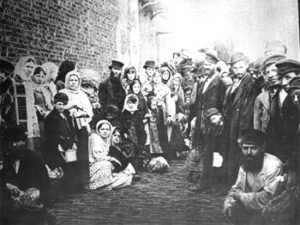 And, let us take the tricky subject of immigration. It seems these days that many people find it easy to be Nationalistic, to close borders, viewing immigrants as outsiders who should have no business with us.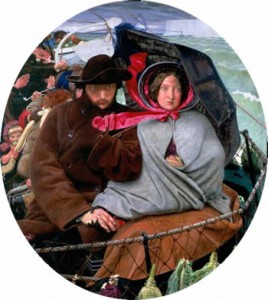
 I have recently published my step-by-step course, Tracing Ancestors in the UK on Udemy. This is a step by step course in Genealogy for Beginners, and you can find out more
 Recently,
  This is certainly the most obvious one, and it is generally accepted that we inherit our looks from a combination of our ancestors, often our parent or grandparents. Sometimes it seems that a particular facial feature comes down a line. I myself seem to have inherited the ‘Cregeen chin’ – a fairly prominent chin from my father’s mother’s family that you can also see in my father (to a certain extent), my uncle Alan, and my paternal grandmother. I have two silhouette portraits of my paternal grandparents, and you can see the family feature in this. In fact, my grandmother’s profile looks remarkably like my own.
 he had come from a long line of Stickneys who had lived in that state since the early settlers. OK – we weren’t in Massachusetts in the 1970s, but that whole part of America known as New England, has a very distinct ‘feel’ about it which I love.